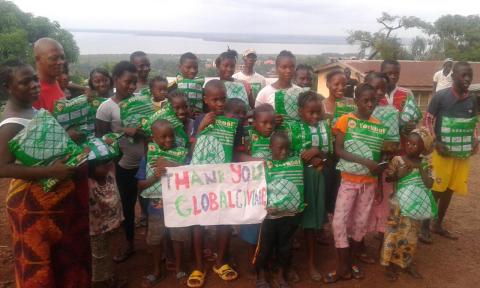
Mosquito Nets Save Lives
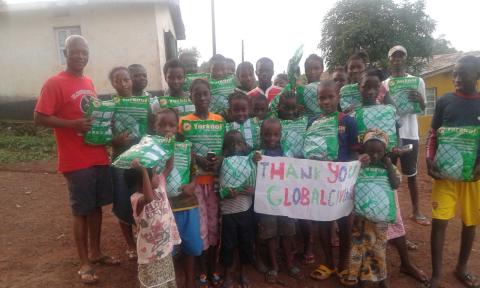
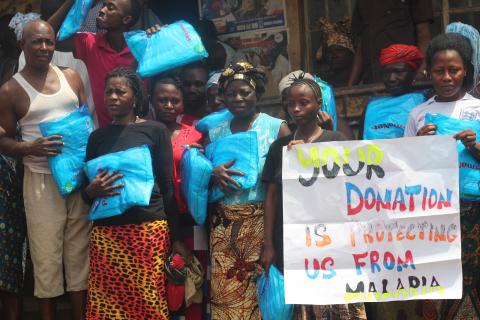
Sub-Saharan Africa has faced health related challenges for many years, including Ebola, which gained worldwide attention a few years ago when it spread beyond the continent of Africa and threatened lives abroad. Thankfully, the 2014-2015 Ebola Outbreak has been contained, but as much of the world starts to relax, Africa continues its ongoing fight against malaria.
Access to Safe Water is a Luxury

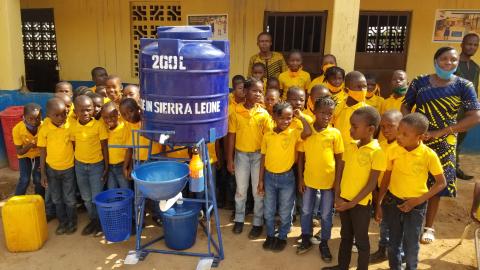
Many of us take our access to running water for granted. In the U.S., the average family of four uses about 400 gallons of water per day and the toilet is responsible for about 27% of that.[1] We often forget that access to safe water is a luxury to many people; in 2015, 683 million people did not have access to improved drinking water.[2] African countries are in the most critical need of water resource investments.

What are the Chances of Survival for an African Child?

An African child dies every 35 seconds from pneumonia [1,2]. Every minute one child dies from malaria [3], one child dies from measles [4], and six children die from pneumonia or diarrhea [2]. As of 2013, the World Health Organization (WHO) estimates five children under the age of five die every minute in the African region [6]. Preventable deaths rank highest on the list of ‘under five’ childhood killers in Africa.

A Common Enemy

Barring a zoo escape or a visit to Mike Tyson’s house, I think we are safe from becoming the victim of one of Africa’s indigenous predatory animals. But our geographic separation from the African continent does not insulate us from the most deadly animal in Africa—the mosquito.

Diabetes: Rising in The Gambia and Beyond

Living in a fast-food-filled Western society, diabetes isn’t necessarily a condition that one would immediately correlate with African nations. Surprisingly, diabetes is “on the rise everywhere and now most common in developing countries” according to Dr. Margaret Chan of the World Health Organization (WHO).[1] Although Type 2 diabetes can be caused by “unhealthy eating and lack of physical activity,”[1] it is a condition more broadly rooted in malnutrition, an issue far too familiar in African nations like The Gambia.

Concerns Mount as Ebola Contact Count Rises

Health authorities have responded to last week’s Ebola Virus Disease (EVD) flare-up in Guinea by working with the World Health Organization (WHO) and other agencies to identify people who have been in contact with the recent victims. Additionally, campaigns to increase public awareness are again under way as health authorities ramp up their response to the new threat. Ebola education and awareness was one effective tool in the fight to end the EVD outbreak last year, which was the largest Ebola outbreak in history.

Looking For Candidates to Lead Africa into the Future? Look No Further!

West African governments are facing a deluge of obstacles that are hindering economic stabilization. The Centers for Disease Control and Prevention (CDC) have estimated that over 11,300 deaths in Guinea, Sierra Leone and Liberia were caused by the Ebola virus. Although the World Health Organization (WHO) has recently declared all three of these countries free of the Ebola virus, the widespread casualties have left an urgent need to provide food and shelter for thousands of orphaned children.

The Village Wishing Well

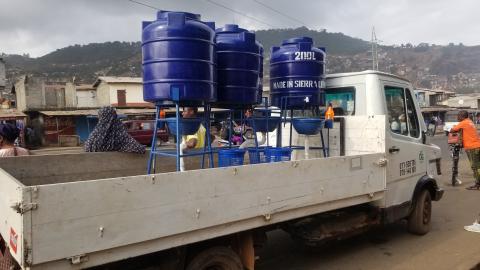
Every day, many villagers in Ethiopia and other African countries face the harsh reality that dirty and potentially disease-ridden water is all they have access to. Sadly, many villagers must walk for hours daily in order to fill their water containers from pools that may be contaminated. Those who dare to drink the water risk fatal diseases while those who refuse to drink it may succumb to dehydration.

The Tiny Creature That Kills By The Million

Question: What weighs in at one-six-hundred-thousandths the size of a King Cobra and is 10 times more dangerous?

Answer: Mosquitos

OK – lets start with the maths…

A mosquito weighs in at 10 milligrams. Therefore, you need 100 of them for a gram, right?  If you put one hundred thousand of them in a paper bag they would weigh a kilogram.  Compare that with a king cobra weighing 6 kilograms

All the venomous snakes in the world kill about 100,000 people each year whilst malaria spread by mosquitoes kills ten times that number.

Ebola has almost gone, but life is still desperate in Sierra Leone

Exactly a year ago, I first wrote in these pages. At the time, Ebola had devastated not just my life but all of Kenema, my city. Now, I am thankful still to be able to tell my story and Ebola has almost gone. But the hard truth is that it will take us so long to get back even to the low levels of development we had before.

Subscribe to Disease & Disaster

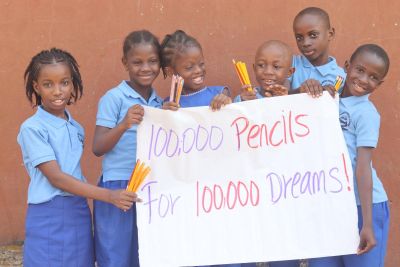
Make a Difference Today: Donate to the Year of the Pencil Campaign

On November 20th, this movement placed over 100,000 pencils into the hands 

of children across Sierra Leone in 20 schools.

Each pencil tells a story — of hope, opportunity, and possibility. 

Education is more than lessons — it’s liberation.

Every $25 helps children write their dreams. 

👉 Help provide pencils by donating today!