
A tricky question and one with no easy answers. Non-governmental organizations and their international counterparts have played significant roles in bridging the gaps in areas where governments have been lax.
If you think about poverty eradication movements, clean energy, environmental challenges, education systems, and even governance itself, these organizations have their prints all over with positive outcomes in the end. In other words, no nation can work without some of these organizations.
But at the same time, these organizations need to align with the systems they operate within. Governments worldwide have regulations governing engagements with NGOs and how they should perform within their jurisdictions.
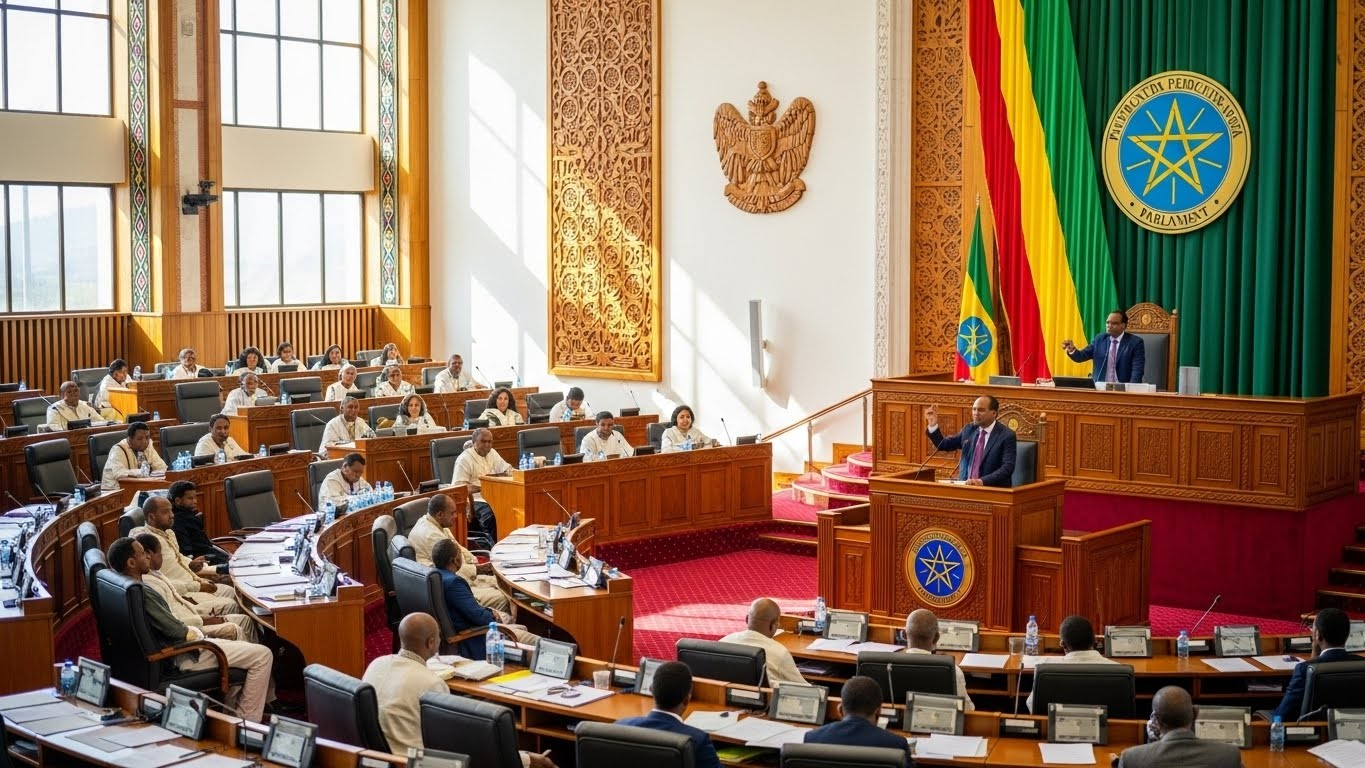
Even so, conflicts have arisen from time to time. In Ethiopia, the government imposed strict rules on NGOs in 2009 under the Charities and Societies Proclamation (CSP). According to an article by The Africa Report, the government stipulates that non-governmental organizations (NGOs) can receive no more than 10% of their funding from abroad.
"The government, which is extremely suspicious of foreign influence, said the law would ensure greater openness. In a stroke, Ethiopia became one of the harshest environments for NGOs on the continent," the article continued.
Although the policies on NGOs were revised in 2019, the government still maintains a strong oversight role over the organizations.
In 2014, the Kenyan government deregistered over 510 NGOs for failure to account for donor funds. The country also had, in the past, shut down organizations that dealt with election and governance matters, as stated in a release by Al Jazeera in 2014
A special report by Godfrey (2019) of the advocacy group Freedom House, titled The Spread of Anti-NGO Measures in Africa, reported that 11 African countries had imposed policies that constrained NGOs over the last 15 years.
Stating that, "Seven countries—Egypt, Tunisia, Rwanda, Zambia, Malawi, Mozambique, and Tanzania—have anti-NGO measures pending or maybe moving to introduce them, while six—Kenya, Malawi, Angola, Nigeria, Congo-Brazzaville, and Zimbabwe—have introduced such measures only to have them abandoned by the executive, rejected by the legislature, or invalidated by the courts. These laws and policies seek to impose state control over civil society, particularly NGOs that work on human rights and governance issues."
Finding the Balance
NGOs operating in civil rights and governance spaces have seen greater scrutiny by their host government - for good and sometimes bad reasons. Some governments view these organizations as the mouthpiece of their donors, who are usually from other regions and nations.
The suspicion between these organizations and governments cannot be done away with as quickly. And to some extent, they can put pressure on governments on how they operate.
When registering NGOs, it is required to have their area of expertise, jurisdiction, and playground well stipulated. It is also with knowledge of a country's regulation should a non-governmental body registers and operates - a symbiosis that is always on the verge of chaos.
According to Robinson (2016), in his paper titled Strengthening Civil Society in Africa: The Role of Foreign Political Aid, a symbiosis is necessary for Africa.
"Civil society is … a vital instrument for containing the power of democratic governments, checking their potential abuses and violations of the law, and subjecting them to public scrutiny. Indeed, a vibrant civil society is probably more essential for consolidating and maintaining democracy than for initiating it," the paper elaborated.
"Interaction between the formal political regime and civil society contributes to and requires a responsive government, which is one of the characteristics of a functioning democracy. Supporting pluralism, e.g., the development of autonomous civil associations, professional and interest organizations, is an important step in fostering democratization," Robinson continued.
Finding a balance is a matter of principle and law. It is the right of NGOs dealing in governance to advise governments on certain issues that negatively or positively affect their citizens, but in a free-speech environment. In turn, it is also advisable for NGO and international bodies not to meddle in a country's political issues, as it could be interpreted as external interference by donors.
Strings Attached

Most of the aid coming to Africa is channeled through NGOs. For example, the State Department and USAID administered assistance allocated to African countries from FY2019 appropriations, totaling roughly $7.1 billion (Tomás et al., 2023).
However, with this aid, conditions and milestones are set for the recipient country, which experts have said, manipulate a country's agenda. Whoever pays the piper calls the tune.
"A mixture of internal and external factors makes aid not be geared towards people's welfare but a long-term gain for donors. African political economy is a product of Western-imposed models and ideologies. My candid view remains. African nations' development may still depend on the willingness of the world powers to give space to nascent economies on their own, or simply depend on the willingness of developing nations to set priorities and agenda aimed at standing on their own or designing their own fate," Niyonkuru F. (2016) Failure of Foreign Aid in Developing Countries: A Quest for Alternatives bared.
Some of the stringent measures imposed by foreign organizations and agencies might not be in the best interest of the African nations. It is the government's responsibility to decline such moves from organizations. Governments primarily act in the best interest of their citizens and not foreign bodies.
Niyonkuru argues that aid organizations need to let citizens of developing nations put their agenda first before exploring foreign schema (Niyonkuru, 2016).
These are why some influences from aid organizations have weakened the government systems in Africa. And for the same reason, African governments need to slowly peel away from depending on aid.
All said and done, the civil societies, NGOs, and international aid organizations are things governments cannot wish away in their entirety. A favorable mechanism for engagement has to be set forth, and it has to be clear. The benefits of welcoming NGOs in Africa outweigh the bad, as they look keenly at problems and challenges governments have overlooked.
On the other hand, NGOs and international bodies need to cultivate a mature and stable relationship with the host government. A symbiosis of mutual benefit cannot come with strings attached. It has to be balanced to benefit the host country's citizens.
Reference List:
- The African Report. November 29, 2017. NGOs: Blessing or curse? https://www.theafricareport.com/777/ngos-blessing-or-curse/
- Aljazeera. December 16, 2014. Kenya closes down hundreds of NGOs. https://www.aljazeera.com/news/2014/12/16/kenya-closes-down-hundreds-of-ngos
- Godfrey Musila. May 13, 2019. The Spread of Anti-NGO Measures in Africa: Freedoms Under Threat. Freedom House. https://freedomhouse.org/report/special-report/2019/spread-anti-ngo-measures-africa-freedoms-under-threat
- The Retreat of the State (Editorial Introduction) John Dearlove and Gordon White Article first published July 1987, IDSB18.3 23 Alternatives in the Restructuring of State–Society Relations: Research Issues for Tropical Africa David Booth Article first published October 1987, IDSB18.4 29 Towards a Political Analysis of Markets Gordon White Article first published July 1993, IDSB24.3 45 Strengthening Civil Society in Africa: The Role of Foreign Political Aid Mark Robinson Article first published May 1995, IDSB26.2. https://opendocs.ids.ac.uk/articles/report/Strengthening_Civil_Society_in_Africa_The_Role_of_Foreign_Political_Aid/26480596
- Tomás F. Husted, Lauren Ploch Blanchard, Alexis Arieff, Nicolas Cook. November 7, 2023. U.S. Assistance for Sub-Saharan Africa: An Overview. Congressional Research Service. https://crsreports.congress.govR46368
- Niyonkuru F (2016) Failure of Foreign Aid in Developing Countries: A Quest for Alternatives. Bus Eco J 7: 231. doi:10.4172/2151-6219.1000231