
The Future Began Here — Lessons from a Computer Training Room with a Cloth Screen
Summary: In December 2006, in a modest training room in Freetown, Sierra Leone, Develop Africa launched its first computer training program. With only a few computers, a bedsheet as a projection screen, and limited resources, the goal was simple but powerful: to empower young people through education and technology. For many students, it was their first time touching a computer, and each click of the mouse represented new possibilities. Despite frequent power outages and minimal equipment, the program thrived through creativity, persistence, and belief in the students’ potential.
That small training room became the seed of a much larger movement. What began as a simple training session grew into Develop Africa’s broader mission—building computer labs, providing scholarships, mentoring youth, and expanding educational opportunities across Africa. The experience reinforced a lasting leadership lesson: meaningful change doesn’t start with perfect conditions, but with the courage to begin using what you have.
Core message: Great movements often begin in small rooms—with belief, resourcefulness, and the willingness to start.
"We didn’t wait for perfect conditions. We started with what we had — a few computers, a cloth screen, and the conviction that Africa’s youth could rise through education."
The Room That Held a Dream
It was December 2006 in Freetown, Sierra Leone — hot, bright, and alive with the sounds of a city rebuilding itself. Outside, taxis honked, and children laughed in the dusty streets. Inside a modest green-walled training room, a quiet revolution was beginning.
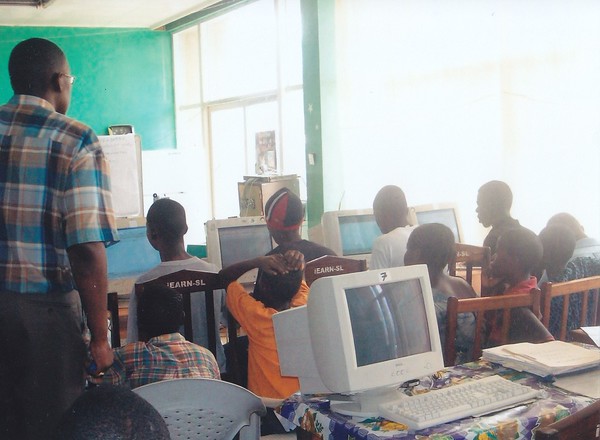
Rows of CRT monitors — those bulky, curved computer screens of the early 2000s — sat on narrow wooden desks. Their faint hum filled the air, joined by the rhythmic clacking of keys and the slow, deliberate clicks of new learners discovering a mouse for the first time.
This was Develop Africa’s first computer training program.
Before arriving, I had reached out to a friend, Sylvanus Murray, Founder of YEDEM, about offering IT training during my stay. He connected me with Andrew Greene of iEARN Sierra Leone, who graciously opened the doors for this collaboration.
There was no air-conditioning, no modern projector, and certainly no Wi-Fi. The space belonged to iEARN-Sierra Leone — our partner and friend — and together we were testing something radical: the belief that technology could unlock futures, even here, even now.
At the time, I didn’t know this moment would shape the next two decades of my life.
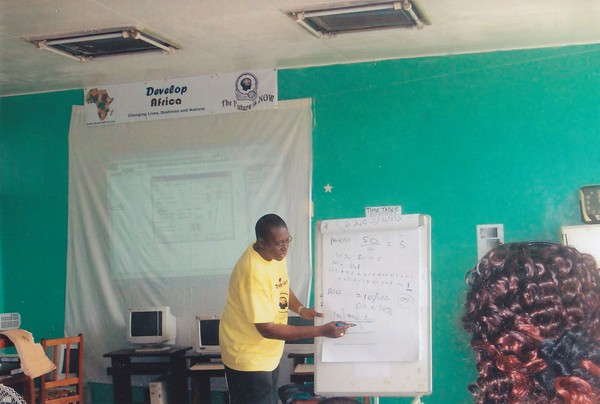
At the front of the room, I stood in a bright yellow shirt that read:
Develop Africa
Changing Lives, Destinies, and Nations
The Future is NOW
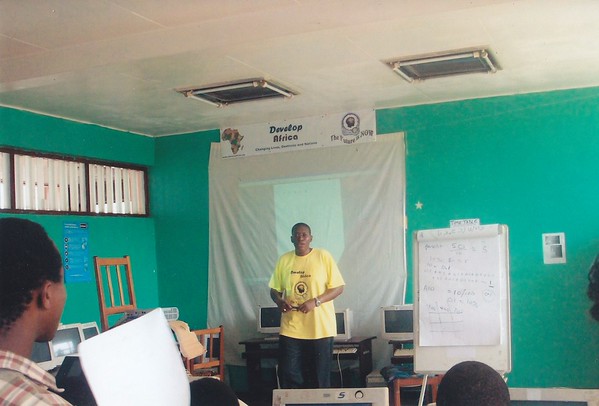
Behind me, a simple white bedsheet hung against the wall — our improvised projection screen. I balanced the projector on a stack of books, adjusted the focus knob, and watched as the faint grid of a Microsoft Excel spreadsheet appeared on the cloth. The letters flickered in uneven light, but the message was clear: the future had entered the room.
A Classroom of Firsts
That day was filled with firsts.
For most of the students, it was their first time touching a computer, their first time hearing the word cursor, their first time realizing that learning could feel like power.
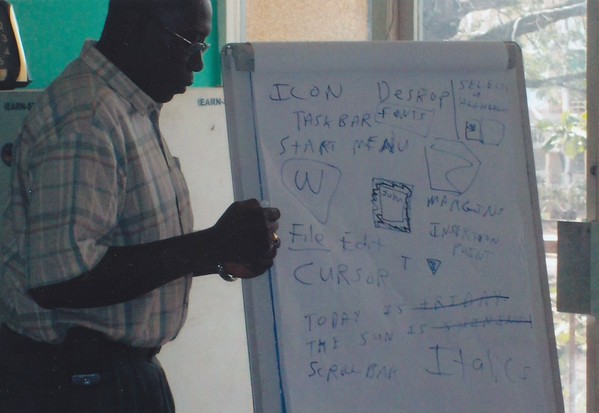
On the flipchart beside me, I wrote the day’s vocabulary in blue marker:
- ICON
- DESKTOP
- TASKBAR
- START MENU
- FILE → EDIT → CURSOR
Simple words, but heavy with meaning.
Every term represented entry into a new world — a language that connected Freetown to the rest of the globe. In that training room, with its peeling paint and single ceiling fan turning slowly above us, these words became symbols of hope.
Mariama, one young woman — I still remember her smile — sat near the front. She handled the mouse as it might break in her hand. When she finally double-clicked and saw a window open on the screen, she gasped and whispered to her neighbor, “It worked!” The entire row smiled with her.
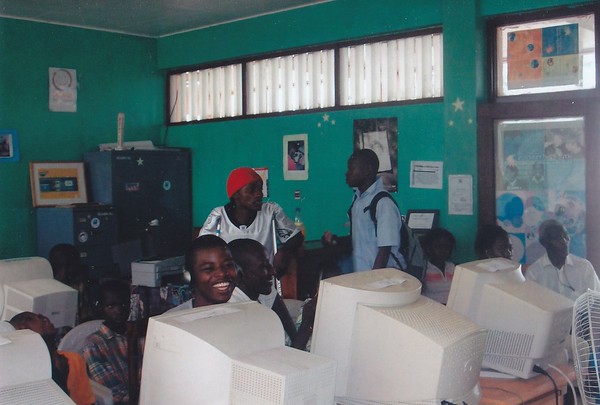
It was a small moment — but it was the sound of possibility awakening. That’s what education does. It lights sparks that no hardship can extinguish. These students, many of whom had lost years of schooling during Sierra Leone’s long civil war, were reclaiming something sacred — the right to dream again.
"Every click of the mouse was a declaration: I can learn. I can build. I can belong."
Teaching with What You Have
One of my favorite photos from that season shows me standing beside a whiteboard, marker in hand. My writing is uneven, almost childlike. But it captures the essence of what we were doing — building digital literacy from zero, one word at a time.
We had no formal training materials, no polished curriculum. Just conviction. Electricity flickered unpredictably, often cutting out mid-lesson. When that happened, we switched to theory — drawing icons and explaining “save” functions on the board. When the power returned, there were cheers. The students would rush back to their seats to practice what we had just discussed.
Those moments taught me something profound about leadership:
Don’t wait for perfect conditions. Start where you are. Use what you have. Do what you can.
Our projection screen was a wrinkled bedsheet. Our desks were mismatched. Our resources were meager. But our belief in transformation was abundant.
We learned early that resourcefulness is a renewable energy — one that powers dreams even when electricity doesn’t.
The Spark of Inclusion
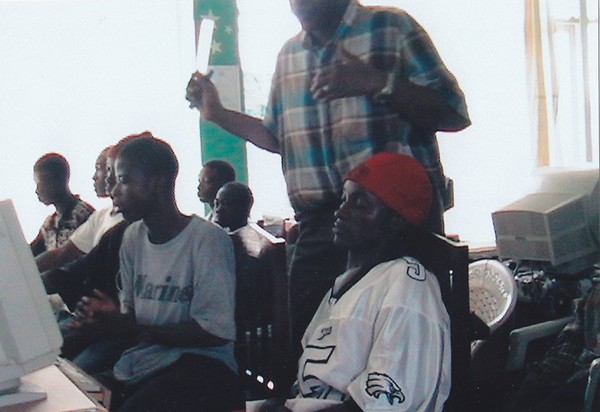
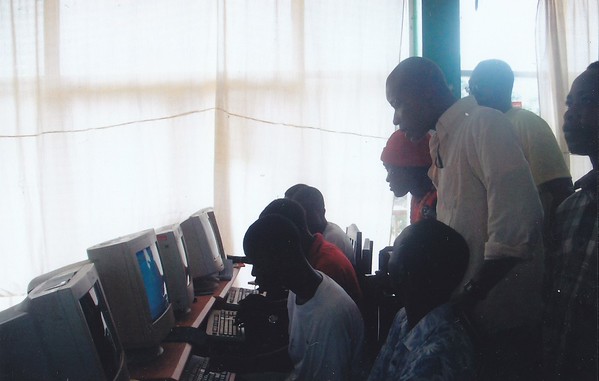
Another image from those early sessions shows a group of students sitting side by side — men and women, teenagers and young adults. Their faces are serious, intent, illuminated by the glow of the monitors. Some had dropped out of school years before. Others were unemployed youth searching for a foothold in a changing world. But here, in this small green room, they were equals — learners on the same path toward empowerment.
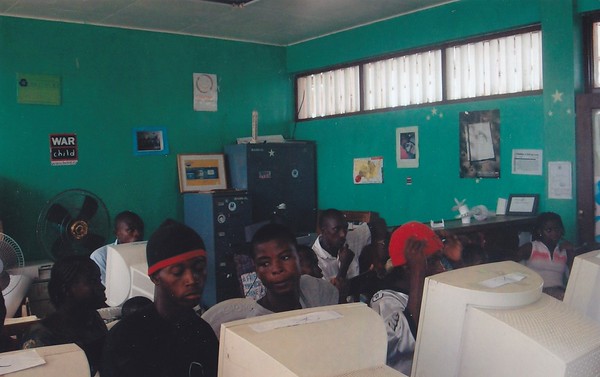
That was important to me. Develop Africa wasn’t just about technology; it was about inclusion. We wanted every student, regardless of background, to feel that they belonged in the future we were building.
Computer literacy became a metaphor for dignity.
Learning to type wasn’t just about creating a document; it was about writing one’s own story again. And as I watched them help each other — explaining keys, trading notes, cheering when someone succeeded — I realized that empowerment is contagious. When one person learns, everyone rises.
"Empowerment spreads fastest through shared understanding."
“The Future is NOW”
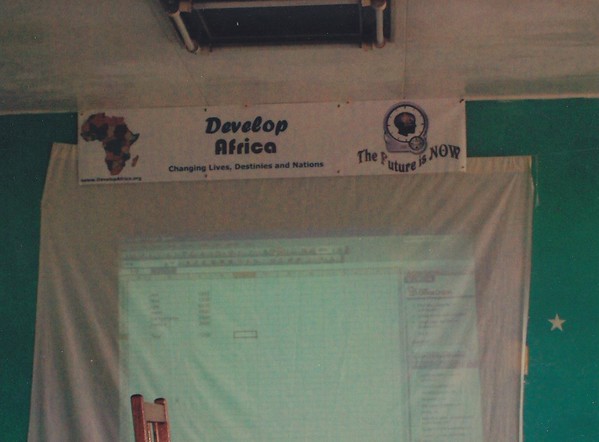
That banner above the screen — “The Future is NOW” — was more than a slogan. It was a declaration of faith.
For too long, development narratives had been filled with words like “someday” and “eventually.” Someday we’ll catch up. Eventually, Africa will rise. But our work began with a different conviction: that the future doesn’t wait — it begins with every small act of courage today. Every keystroke, every flipped notebook page, every spark of confidence in that room was a small revolution against the notion of delay.
That phrase — “The Future is NOW” — became part of Develop Africa’s heartbeat. It reminded us, then and now, that impact is not postponed; it’s lived.
Lessons Written in Marker Ink
The flipchart from those early lessons still stands vivid in my memory. On it, my hand-drawn icons — a folder, a cursor, a floppy disk — are scattered across the page. It looked amateurish, maybe even messy. But that board was a map — a guide for students stepping into an unknown world.
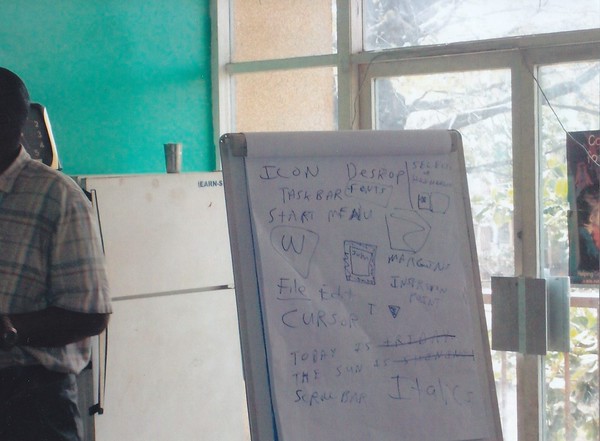
From that board, I learned several truths that have never left me:
- Simplicity is strength.
The simplest tools can teach the deepest lessons if used with intention. - Clarity beats complexity.
You don’t need fancy presentations to communicate vision — only honesty and focus. - Teach people to teach others.
Knowledge multiplies when shared. From that first group, several became trainers themselves, expanding the ripple of impact. - Every skill builds confidence.
Empowerment starts small — a document typed, a file saved — but grows into leadership and independence.
Those scribbles in marker ink were the first blueprint for what would become Develop Africa’s lifelong mission: equipping minds to transform nations.
"Progress doesn’t begin with abundance. It begins with belief."
Behind the Scenes: Struggles and Small Victories
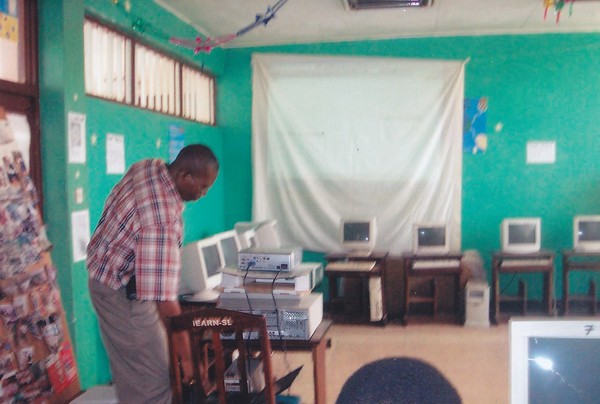
There’s a photo where I’m bent over a tangle of cables, adjusting the projector. Around me, chairs are stacked, monitors hum, and boxes labeled “Computers for Schools” are piled in the corner. That single image tells an unseen story — the struggle behind the scenes. Getting computers to Sierra Leone in 2006 was no small feat. Each shipment required coordination across borders, customs, and uncertain infrastructure. Some machines arrived damaged; others had to be rebuilt on site. There were days when we worked through the night to troubleshoot or rewire a network. Days when the power failed for hours, and students still waited patiently, refusing to leave.
We improvised, adapted, and persisted.
I learned that true progress is often disguised as persistence.
No donor report or spreadsheet could capture the determination of those young people who came every day, notebooks in hand, believing that learning this new language of technology would rewrite their story.
And in time, it did.
What the Students Taught Me
Over the years, I’ve had the privilege of addressing / meeting corporate leaders, and mentoring teams across continents. But no group has ever taught me more than those early students in Freetown.
They taught me that:
- Curiosity is universal. You can’t suppress the human hunger to learn.
- Hope is teachable. Once people see the possibility, they begin to believe in their own potential.
- Leadership is shared. In that room, every student became a teacher in their own way.
- Resilience is a form of intelligence. They found solutions in scarcity — a lesson the world still needs to learn.
Those young people didn’t just learn computers; they redefined what was possible with limited resources. And through them, I learned what it truly means to lead with faith.
Seeds of a Vision
Looking back now, I realize that the real transformation that day wasn’t just technological; it was philosophical.
Develop Africa was born not from abundance but from a belief in potential.
We didn’t set out merely to teach typing or spreadsheets; we set out to shift mindsets — to show that Africa’s greatest resource is its people, and that education is the ignition point for everything that follows.
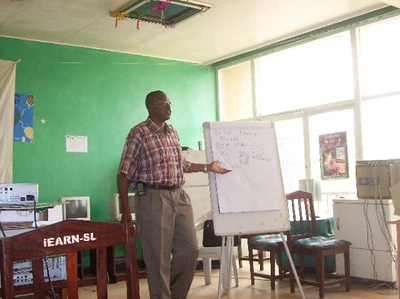
That simple training room, with its green walls and flickering monitors, became the seed from which everything else would grow:
- Scholarship programs for high school and college students.
- Computer labs providing computer literacy
- Mentorship initiatives connecting the diaspora with local youth.
- Supply drives shipping hundreds of barrels of educational materials.
Fredrick is grateful to Develop Africa for sending him through school from primary two through his college graduation.
One of the mentoring sessions organized by Develop Africa - Financial Literacy. Participants shared what they have gained from the mentoring session and how they intend to make use of it.
Each of these later projects carries the DNA of that first class — the belief that empowerment begins in the smallest spaces.
“That training room was a seed. Today, its branches reach across nations.”
The Courage to Begin
Leadership, I’ve come to believe, is not about certainty — it’s about courage. The courage to start when the outcome isn’t clear. The courage to act with what you have. The courage to fail forward. Those early days in Freetown were filled with uncertainty. But each lesson taught me this: vision grows in motion. Every small act of faith — opening that first training, lifting that projector, encouraging one more student — became a brick in the foundation of Develop Africa’s mission.
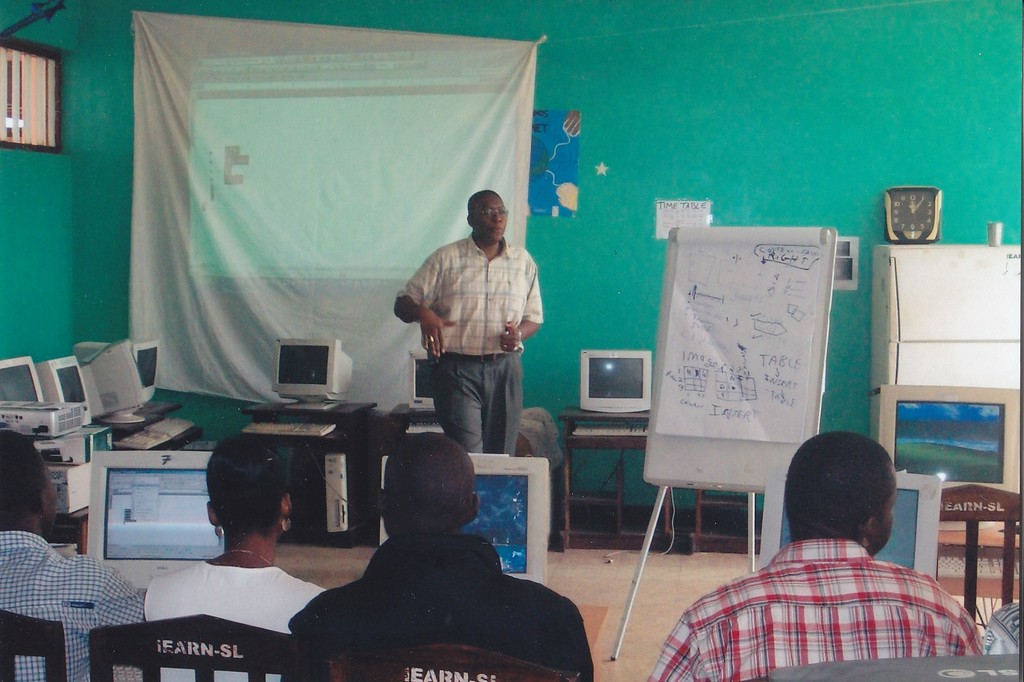
If I could speak to that younger version of myself, standing in front of that cloth screen, I’d say:
“Keep going. You have no idea how far this will reach.”
From a Room to a Movement![]()
From those humble beginnings, Develop Africa has grown into a network spanning continents. We’ve provided scholarships to hundreds of students, shipped hundreds of barrels of supplies, and empowered communities with training, mentorship, and vision. But at its core, nothing has changed. We are still the same movement that began with a few computers, a cloth screen, and the belief that Africa’s destiny could be developed from within.
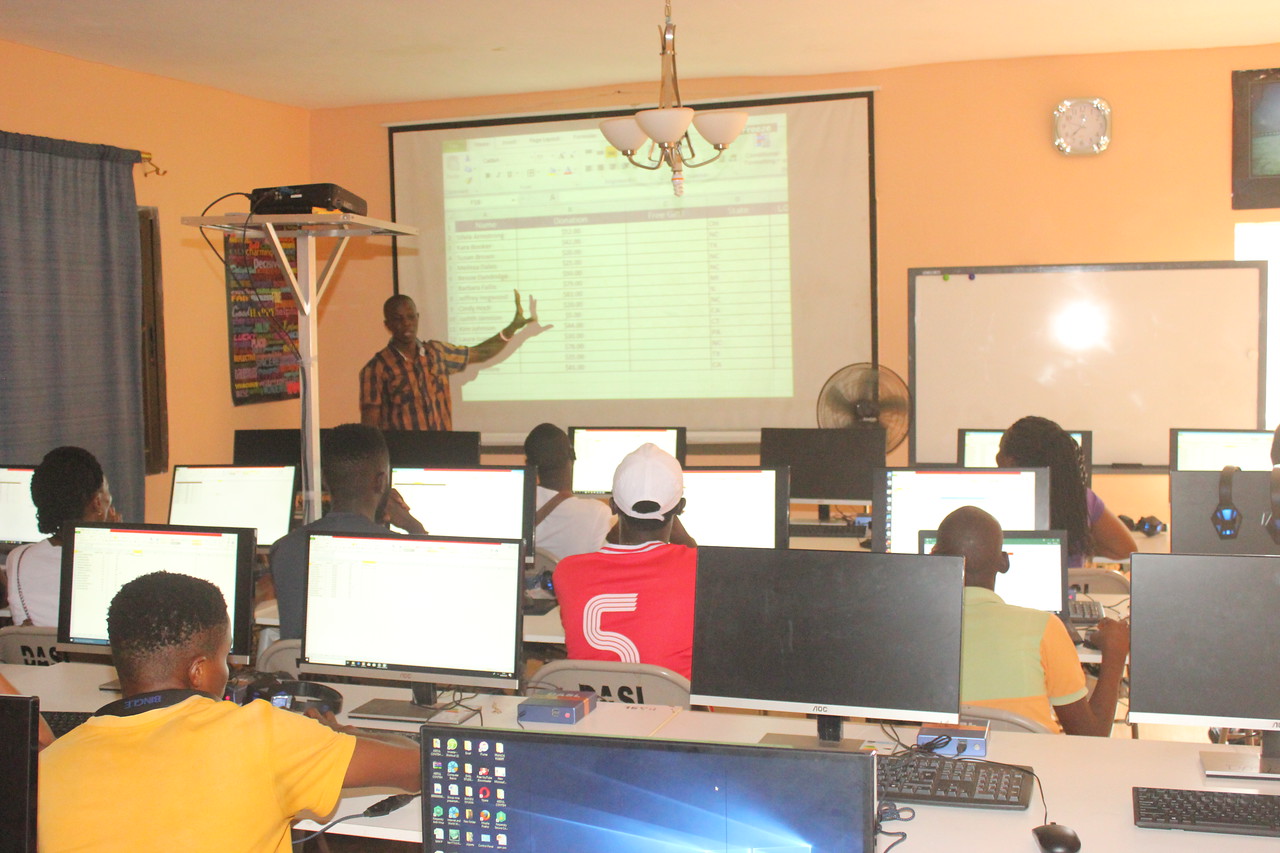
The Lasting Image
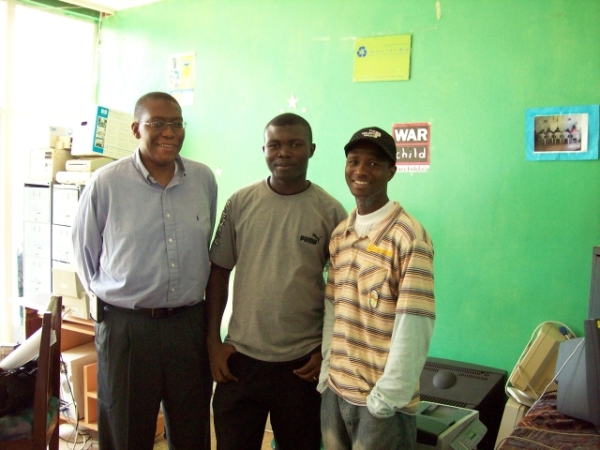
There’s one final photograph that sums up everything. In it, a group of young men and women stand together, some smiling shyly, others beaming with pride. The green wall behind them glows with light from the window. In the corner, the familiar Develop Africa banner reads: “The Future is NOW.”
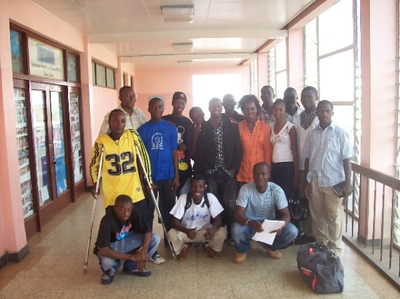
When I look at that image, I see more than students; I see the beginning of a movement. I see courage in their eyes. I see the invisible thread connecting that day to every project we’ve done since. It’s a reminder that the future doesn’t start somewhere else or sometime later — it starts wherever someone decides to act.
“The hum of CRT monitors became the rhythm of hope.”
A Legacy of Vision and Empowerment
Develop Africa’s technology training efforts have deep roots.
Reflecting on the early 2000s, Andrew Benson Greene, founder of iEARN Sierra Leone, shared this about our beginnings:
“Sylvester carried within him a rare combination of humility, conviction, and courage—a belief that educational technologies, when guided by compassion, could renew the minds and hopes of a generation.”
Those early Microsoft Office training sessions in Sierra Leone helped ignite a movement—one that continues today through our digital literacy and computer empowerment programs across Africa."
Reflection: The Thread That Continues
Today, nearly two decades later, Develop Africa has grown in ways that would have seemed unimaginable in 2006.
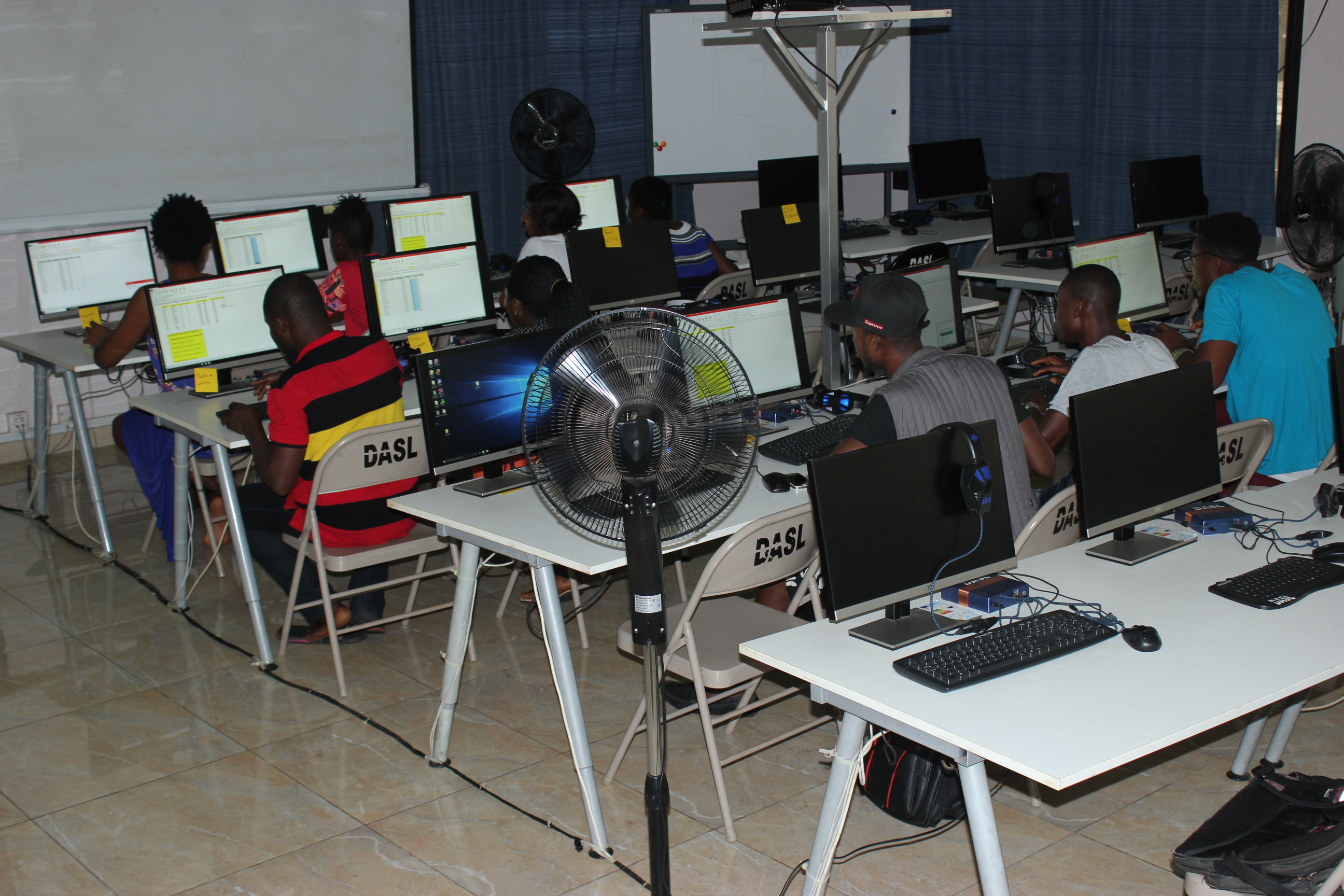
Every program, every partnership still traces back to that first day. The principles we discovered in that green room continue to guide us:
- Resourcefulness over perfection.
- Faith over fear.
- Action over waiting.
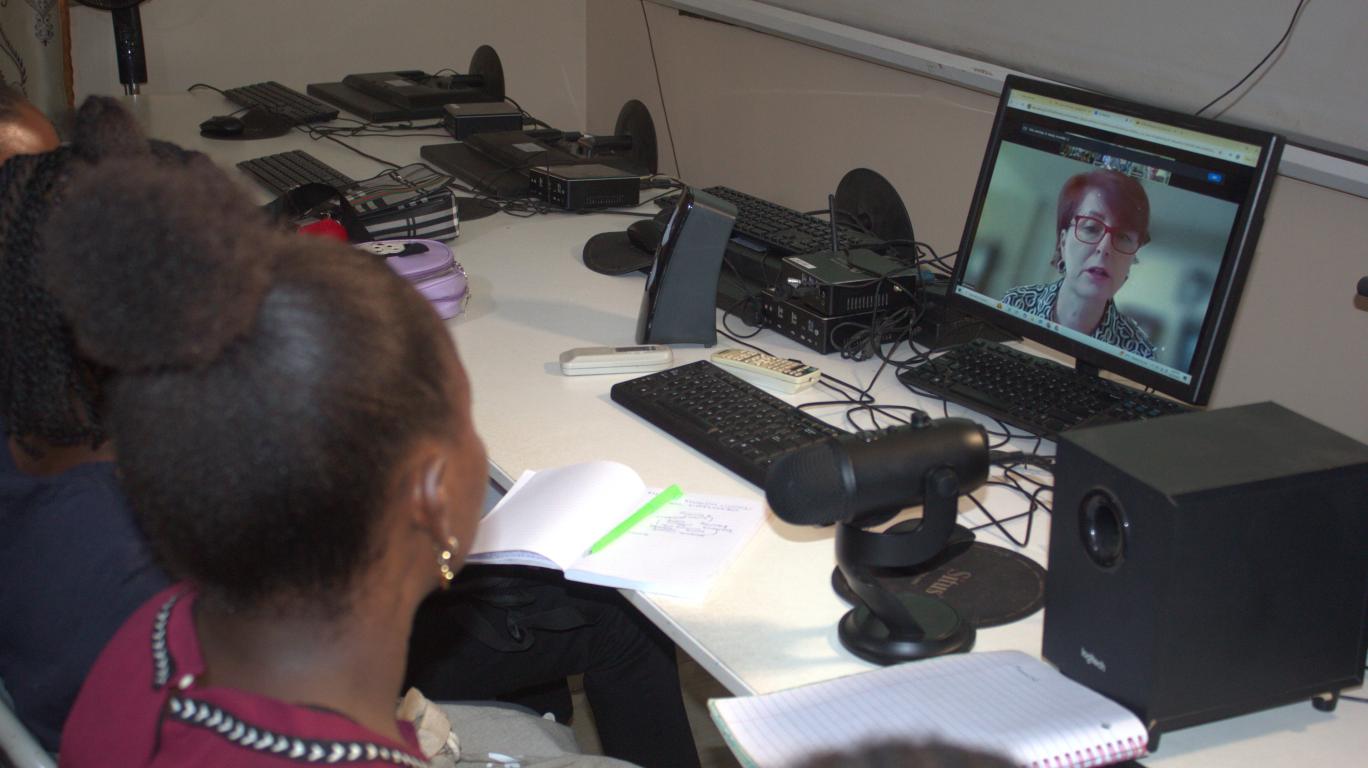
That cloth screen taught me more about leadership than any textbook ever could. It taught me that development begins with a decision — to show up, to teach, to believe.
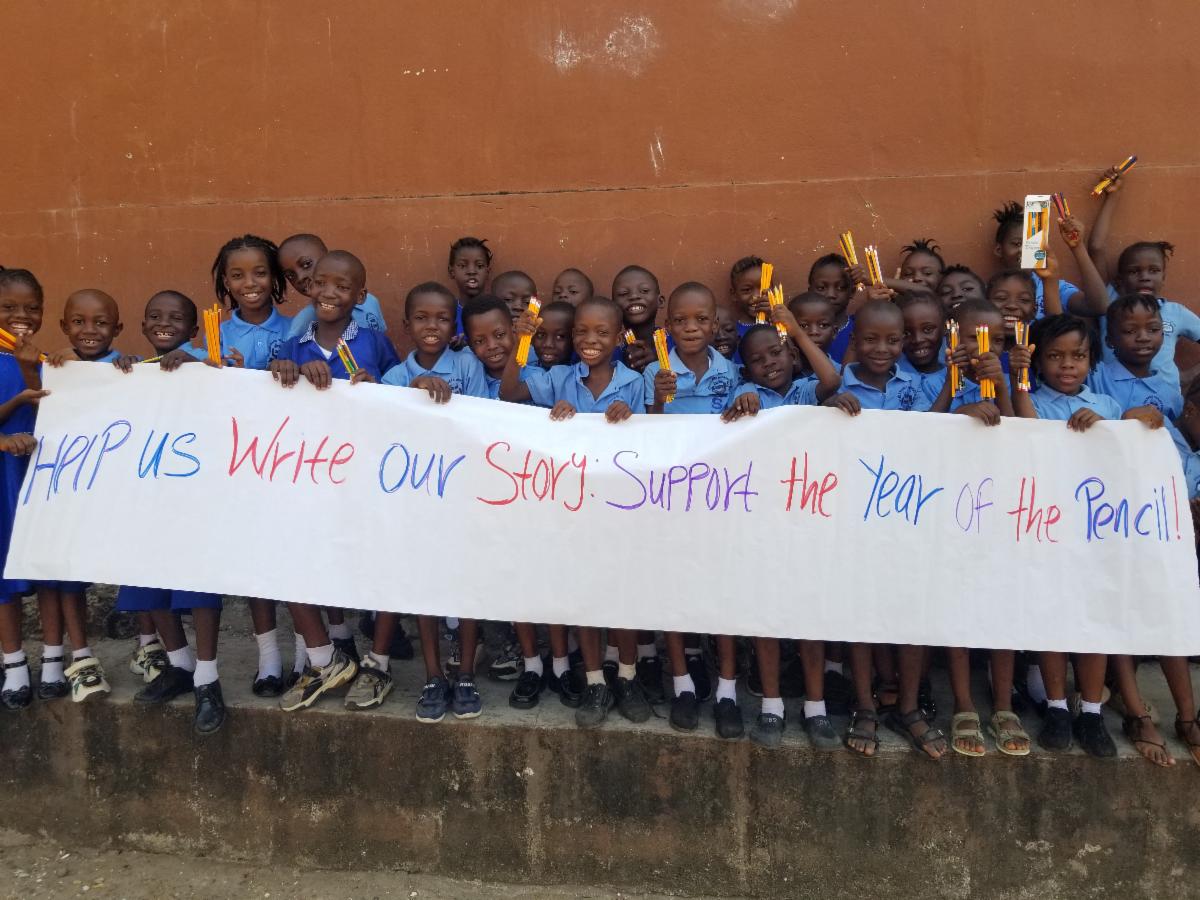
And that’s what we continue to do, one classroom, one child, one pencil at a time.
"If you ever doubt the power of beginnings, remember this:
The future began with a cloth screen, a handful of students, and a dream big enough to fill the world.”
Great beginnings rarely look grand—but they can ignite movements that change destinies.
From that first classroom:
-
Hundreds of youth have gone through computer training programs
-
Many have gone on to jobs, higher education, and leadership roles
What began as a single training session has grown into a movement equipping thousands with the skills to participate in the global economy.
Today, that same spirit continues—through every student we train, every lab we build, and every pencil placed in a child’s hand.
If this story resonates with you, we invite you to be part of what comes next. Because somewhere, in a classroom not so different from that green room, the future is waiting to begin again.
-
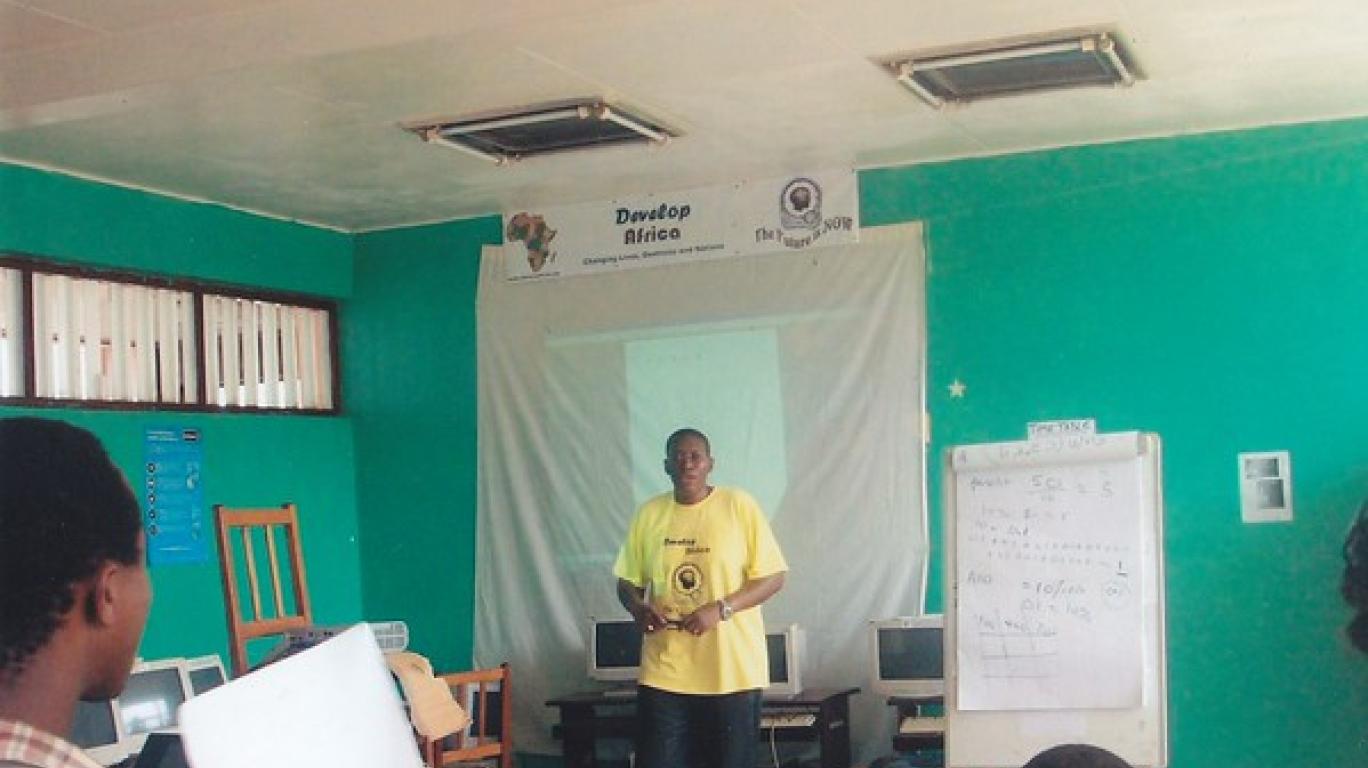 Sylvester - President & Founder of Develop Africa in a yellow T-Shirt in front of a training room in the early days of Develop Africa