Water covers about 71% of Earth’s surface, according to NASA. 71% sounds like a huge majority, but of that number, only 3% of the water is freshwater, and of that three percent, only 1.2% is readily available for drinking, according to National Geographic. That 1.2% is a tiny amount of water, and of that, only 9% of global freshwater resources are in Africa, according to Greenpeace.
While that tiny percentage may seem like a small number, it is actually an important one. A number that impacts the daily lives of Africans everywhere. It affects every aspect of their lives, including schooling.
Hydration improves cognitive function in children, according to the CDC. For students to work to the best of their abilities, they need water to stay hydrated. African students struggle to access water, which impairs their concentration and performance. The best way for students to succeed is to do well in school, but when necessary resources like water are not available, it is a challenge for students. In fact, according to COPA Kids, “Children who are well-hydrated tend to perform better in school, exhibit improved focus, and have more energy for learning and playing.”
Additionally, most of Africa's climate is hot and humid. Humidity significantly increases fluid loss, so people need extra water when it's hot. Considering there is already a lack of available water in Africa, students do not get enough water to meet the needs of the climate. Lack of hydration can lead to fatigue and even illness.
Without clean water, students, especially girls, skip school. As the women of the household, girls often have to skip school to fetch water. And, with the lack of hygiene facilities, girls often skip school because of their menstrual periods. According to UNICEF, when girls have access to clean water, their enrollment rates in school increase by 15%. Increasing the number of women in school could significantly increase their chances of earning a degree and finding a job.
Schools with access to clean water can serve as role models for public sanitation projects and health education. Providing safe water would improve students' health, reduce absences, and also empower students with more knowledge than before. When students learn about real-life issues in school, they become more knowledgeable, and in turn, their communities grow stronger and healthier.
The time to act is now. In countries like the United States, clean water is seen as a basic necessity that is readily available. But that is not the case in Africa. While it is a basic need that impacts children’s abilities to learn, it is not available. Every child deserves the right. For a better future, action must happen.
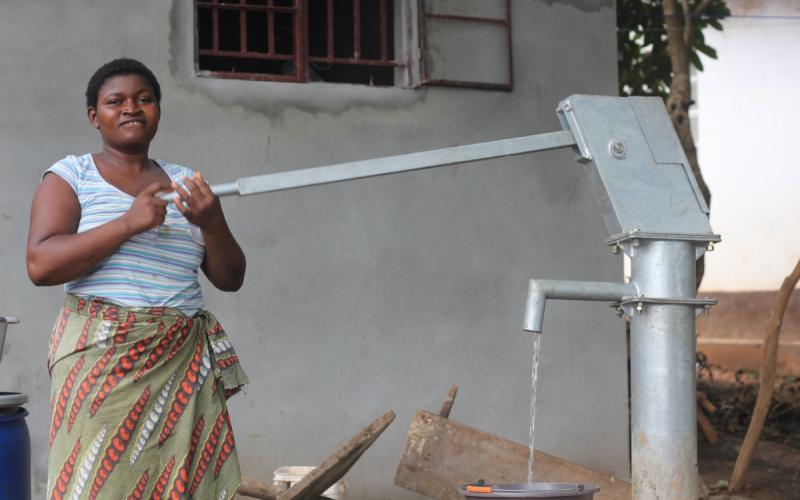
Develop Africa has implemented a solar-powered running water system. A small system just like this has had a huge impact, and it can continue to help others with more donations. These systems will have a long-term effect on communities across Africa, ensuring that students receive the education they deserve.
By Orli Rosenstein