A few years ago, a mother came to our office in Freetown to tell us something we don't often hear in this line of work.
Her child had been receiving tuition and school supplies support through Develop Africa. As a single mother, she had secured a good job, and her financial situation had improved significantly. She was stable. And she said, "I don't need your support anymore. Please give it to someone who does."
She self-graduated.
Wow! I remember being stunned.
I was delighted and pleasantly surprised to hear this. I had met the family personally in one of our program activities.
Her decision to move on made sense as she was no longer "in need".
Most nonprofit work is reactive by design. A need shows up; we respond. A child can't afford tuition; we help. It's necessary work — but it's also, if we're honest, a little like firefighting: we're always arriving after the smoke.
That mother's story made me ask a different question: what if we could predict who's about to need help—and, more importantly, what it would take for a family to never need it again?
We already think this way in other areas of life. We know flu season is coming. We know certain regions will see storms. Insurers price risk based on patterns, not guesswork. Why don't we apply the same discipline to poverty and education?
If a child needs tuition help, it's usually a symptom — the real issue is the family's economic position. So the real question isn't "how do we fund more tuition next year," it's "what moves this family from needing tuition help to not needing it at all — and can we get there faster?"
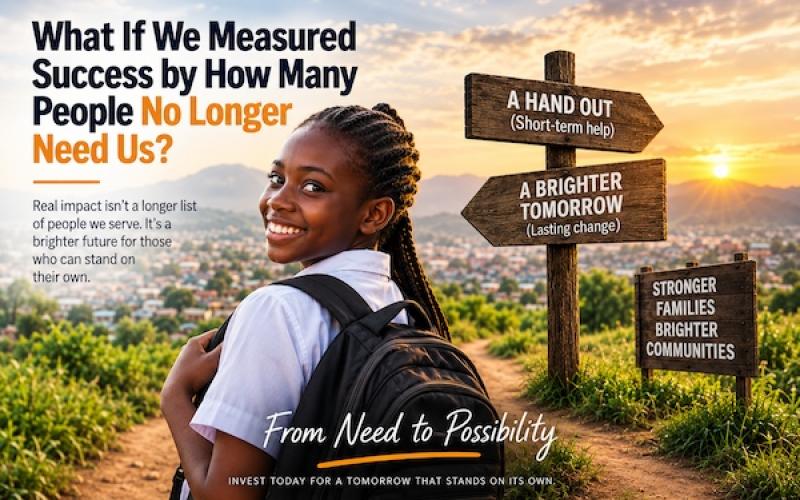
I think the ultimate measure of impact for a nonprofit shouldn't be how many people we served this year. It should be how many people no longer need us.
That's a harder metric to report. It doesn't grow every year — if we're doing our job right, it shrinks. But I'd rather build toward communities that graduate out of dependency than communities that stay on our list forever.
What would it look like if every nonprofit measured success this way?
What would it look like if we started working in a community and made it our goal to empower or develop the community (or a subdivision) to the point where they no longer need us in 5 or 10 years?
#nonprofit #impactmeasurement #philanthropy #socialimpact #DevelopAfrica