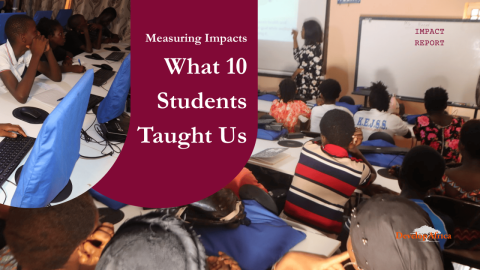
What We Learned After Tracking 10 Students’ Progress in Sierra Leone

Introduction

According to a report by Irish Aid and UNICEF, in collaboration with the Ministry of Education (UNICEF Report, 2019), more than half of 15-year-olds (57%) in Sierra Leone are illiterate, and half of primary school graduates are unable to read or write. Only 61% of primary school teachers are trained, with an even lower rate in rural areas.

Do NGOs / INGOs strengthen or weaken government systems in developing nations?


A tricky question and one with no easy answers. Non-governmental organizations and their international counterparts have played significant roles in bridging the gaps in areas where governments have been lax.

If you think about poverty eradication movements, clean energy, environmental challenges, education systems, and even governance itself, these organizations have their prints all over with positive outcomes in the end. In other words, no nation can work without some of these organizations.

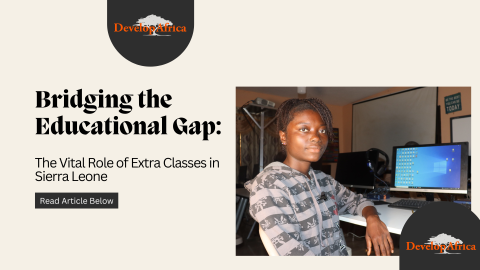
Bridging the Educational Gap: The Vital Role of Extra Classes in Sierra Leone

Introduction

Education is the cornerstone of development, yet in many regions, systemic challenges hinder students from reaching their full potential. In Sierra Leone, where the education system faces structural weaknesses, extra classes have become an essential tool for ensuring academic success. These supplementary lessons not only provide additional support but also equip students with the resources they need to thrive in an increasingly competitive world.

A Classroom With No Pencils - How Develop Africa enables education

Imagine sitting in a classroom with no pencils, paper or textbooks. This scenario is the reality for thousands of children in Sierra Leone. 

Families are having to choose between buying school supplies and buying food. 

When families are forced to choose, the effects are devastating: in 2019, only 39% of primary school students in Sierra Leone were able to reach Grade 6. This country has endured decades of hardship, including the Sierra Leonean Civil War in the late 1990s and early 2000s, the deadly outbreak of the Ebola virus in 2014. 

Transforming Africa with Artificial Intelligence

Can artificial intelligence help bridge the gap between challenges and opportunities in Africa? 

Google believes so, and its AI initiatives are already making a difference. 

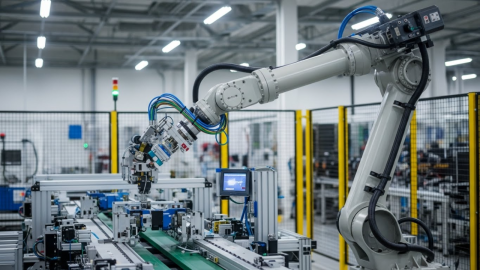
Artificial intelligence (AI), refers to software that can learn, analyze data, and make intelligent decisions—offering innovative solutions to complex challenges. Technology like this has great potential in Africa, as it can help improve infrastructure, education, and healthcare, providing scalable and efficient solutions to pressing issues. 

Subscribe to Technology & Education

Make a Difference Today: Donate to the Year of the Pencil Campaign

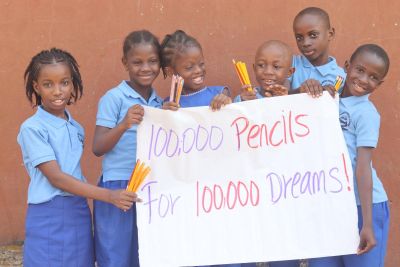
On November 20th, this movement placed over 100,000 pencils into the hands 

of children across Sierra Leone in 20 schools.

Each pencil tells a story — of hope, opportunity, and possibility. 

Education is more than lessons — it’s liberation.

Every $25 helps children write their dreams. 

👉 Help provide pencils by donating today!